
The Snooker T Drill: A Simple Positional Practice Routine
A T-shaped spread of reds creates repeated choices and cue-ball routes. Use this adaptable club drill to practise planning, set a clear success rule and compare sessions without pretending there is one official layout.
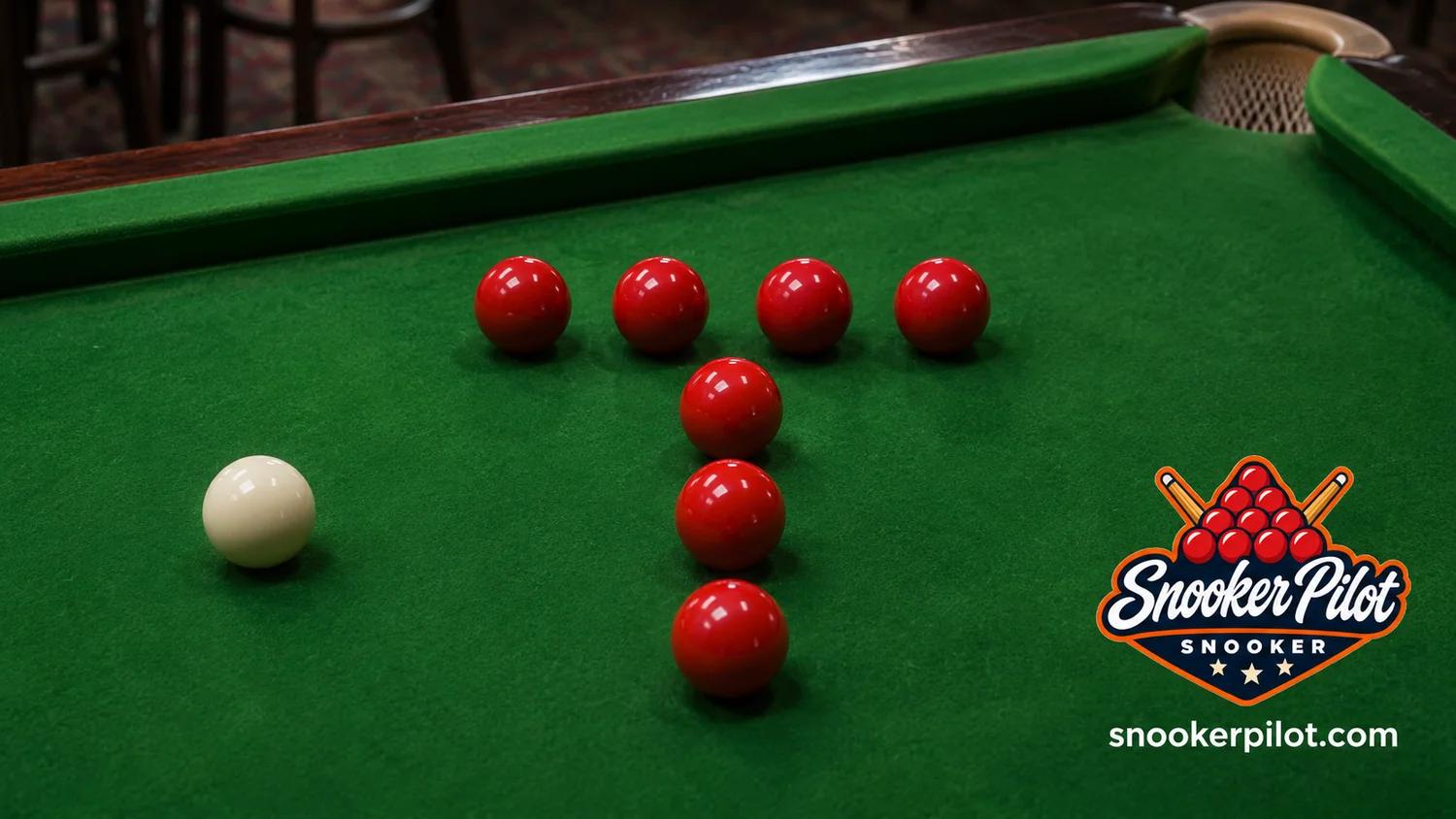
Set up a manageable T shape
There are different versions of T-shaped routines; this is a practical adaptation rather than an official standard. Arrange a short row of spaced reds across a suitable open part of the table and a stem of reds extending from its middle. Start with five to seven reds and generous gaps. Keep the pink and black available where practical and leave enough room to cue safely. Do not mark the cloth. If the pattern creates awkward collisions immediately, widen the spacing rather than forcing a professional-level challenge.
Agree what counts before the first shot
Choose whether every red must be followed by a colour, which colours are allowed and when the attempt ends. For a beginner version, take ball in hand only at the start of each attempt and stop after a missed pot or foul. That is a training condition, not a claim about match rules. Start with the same approximate white position each time. Record the highest legal sequence and the most common reason it ended, instead of changing the scoring rule halfway through a promising attempt.
Plan a zone for the next red
Before potting a colour, identify a comfortable area for the next red rather than a perfect point only a few millimetres wide. Choose routes that avoid disturbing the remaining pattern unnecessarily. Moderate pace and small cue-ball movements make the drill easier to read. If you repeatedly lose position after the same colour, simplify that section and rehearse the route separately. A coach can help distinguish a poor positional choice from an inaccurate delivery. More reds are not useful if every attempt becomes an uncontrolled collision.
Progress through one meaningful change
After several consistent sessions, add a red, narrow a gap slightly or restrict the colour choice. Change only one condition so the result remains comparable. A larger score is not automatically improvement if the layout or starting position became much easier. Finish with a short normal frame to test whether you plan two shots ahead when the balls are no longer arranged neatly. The T drill develops repeatable choices; it does not reproduce every safety, cluster or pressure situation that occurs in real snooker.
At your club with SnookerPilot
Keep the T-drill tally in a notebook, then use SnookerPilot for the club frame that follows. A visible score helps put positional decisions into a normal playing context. Review the route that ended the drill and one decision from the frame, giving the next session a concrete objective rather than chasing an unsupported practice rating.
Compare the packages