
One-Piece, Half-Joint or Three-Quarter Snooker Cue?
Joint position affects transport, case size and how a cue feels in your hands. Compare one-piece, half-joint and three-quarter cues without assuming that one construction guarantees better snooker for every player.
Understand what each label describes
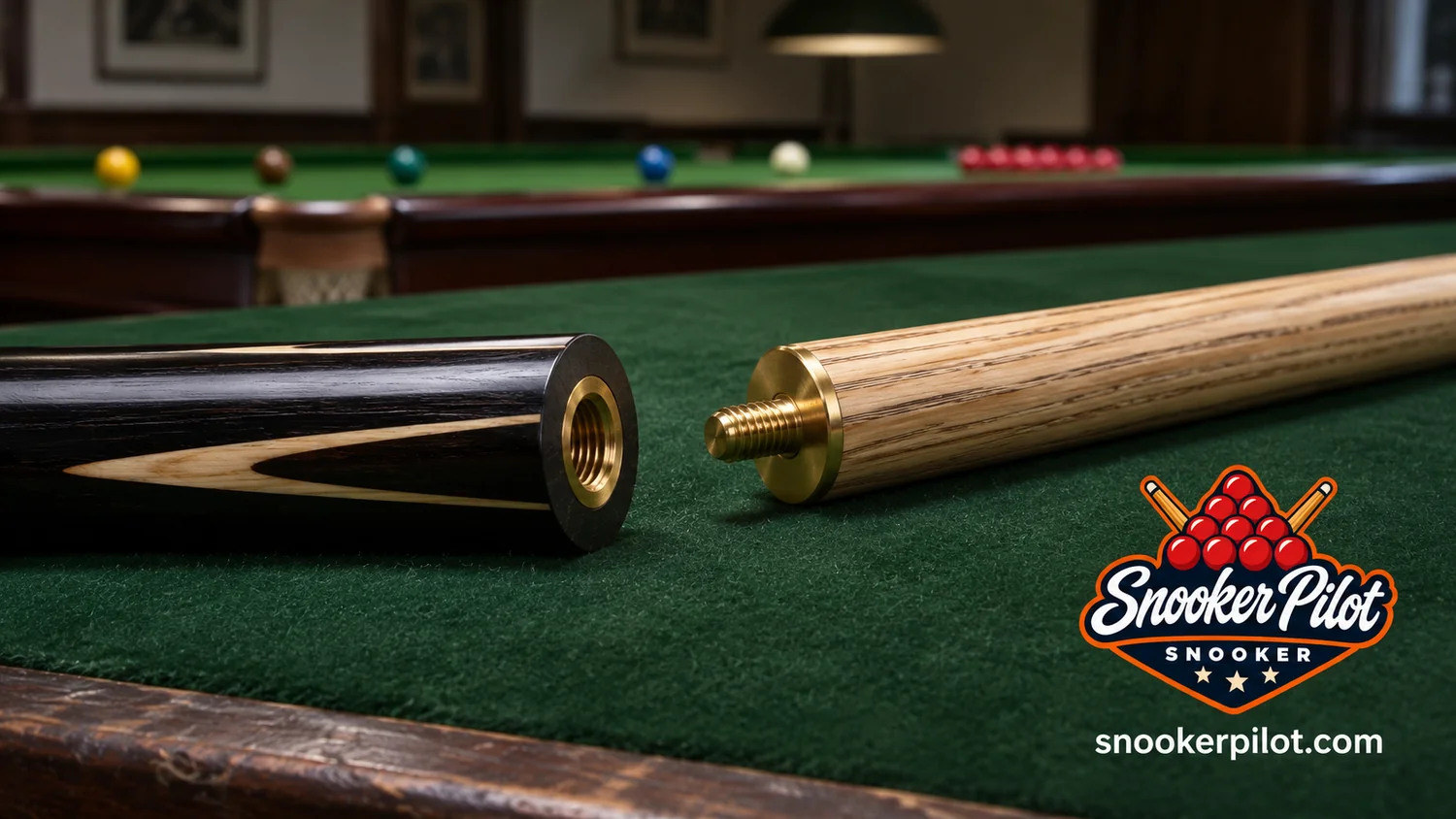
A one-piece cue does not separate for transport. A half-joint cue separates around its middle, while a three-quarter cue has a joint nearer the butt, leaving a longer shaft section. Exact joint locations vary by maker and model: Peradon describes several butt lengths rather than one universal three-quarter measurement. Check the actual dimensions before buying a case or replacement section. The label describes construction, not a quality grade, and it does not tell you whether the cue's balance or tip suits your game.
Consider the journey as well as the table
A one-piece case needs a long clear space in a vehicle and can be awkward on public transport. A half-joint arrangement is generally easier to pack compactly, while a three-quarter case falls between the two depending on its longest section. Measure the closed case, not just the separated wood, and allow room for accessories. If you travel to leagues weekly, a practical case can matter more than an imagined performance advantage. Never leave any cue in prolonged heat, cold or damp conditions.
Compare feel without blaming every joint
Try comfortable pots and cue-ball control shots with cues of similar weight, length and tip condition. Otherwise a change in balance or worn tip may be mistaken for a joint effect. Check that sections join cleanly and securely using the maker's instructions; avoid overtightening or forcing dirty threads. Rattles, visible gaps or damage need attention rather than a harder stroke. If a particular cue feels better, record its full specifications instead of concluding that every cue with that joint position will feel identical.
Check extension compatibility before ordering
A three-quarter joint and a butt extension socket are not automatically interchangeable systems. Confirm thread type, manufacturer compatibility and accessory length before purchasing. Mixing parts that almost fit can damage the joint. Ask about return conditions and any restrictions on custom equipment, and test a reach shot if an extension is central to your choice. For a first personal cue, prioritise straightness, comfortable delivery, suitable dimensions and reliable care. A well-chosen half-joint cue is not disqualified from good play by its transport convenience.
At your club with SnookerPilot
At a club using SnookerPilot, compare suitable cues during agreed practice frames while the score remains easy to follow. Keep equipment impressions in separate notes and assess comfort across several sessions. SnookerPilot supports the club's playing setup; it does not rank joint designs or promise that changing construction will raise your break.
Compare the packages