
Snooker Cue Care: Cleaning the Shaft, Checking Joints and Safe Storage
A practical maintenance routine for a wooden snooker cue: remove surface dirt carefully, protect the finish and avoid the storage habits that invite problems.
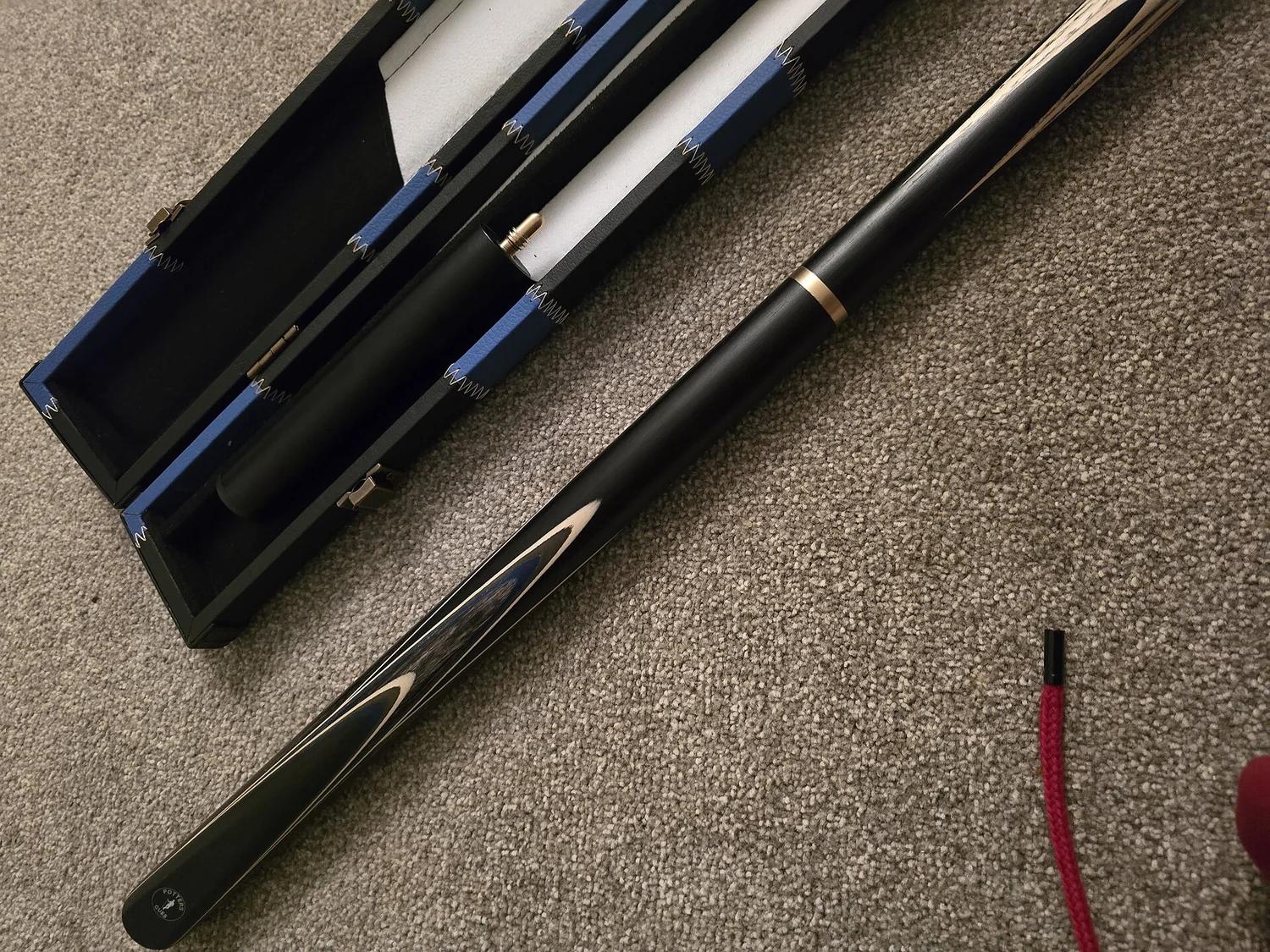
Start with the maker's care instructions
Wooden cues differ in finish, construction and joint design. Follow the instructions for your actual cue before applying oil, wax, polish or solvent. A product that suits one shaft may not suit another, and a smooth surface does not require aggressive treatment after every session.
Before play, check that the tip is secure and the shaft has no obvious damage. If the cue suddenly feels rough or sticky, distinguish surface dirt from damage before trying to sand it away. Repeatedly removing wood changes the equipment rather than simply cleaning it.
Keep ordinary cleaning gentle
A clean, dry cue cloth is a sensible first step during play. Where the maker permits a slightly damp wipe, dry and buff promptly rather than soaking the wood. Keep chalk dust and grit away from the cloth used on the shaft. Avoid treating the cue like a household surface needing a strong cleaner.
Parris specifically warns against sanding the shaft because it removes its protective finish and gradually changes the wood. Do not assume a sticky feel means a new abrasive routine is required. Ask a cue specialist about persistent problems.
How to Choose Your First Snooker Cue: A Practical Buying Guide
Inspect joints without forcing them
For a jointed cue, assemble the parts carefully with the threads correctly aligned. Keep the connection clean according to the manufacturer's guidance and do not force a joint that suddenly feels wrong. A visible gap, unusual movement or damaged thread deserves inspection rather than greater tightening force.
Check extensions in the same way before using them across a table. A loose connection can undermine control and confidence. This is a condition check, not an invitation to dismantle fittings or apply an unapproved lubricant to solve every noise.
Store the cue away from sudden changes
A suitable protective case helps during transport. Avoid leaving a wooden cue leaning against a wall, near strong heat or in a car through changing temperatures and humidity. Use the manufacturer's recommended rack or flat storage method when the cue is out of its case.
After a session, wipe away ordinary dirt, inspect the tip and return the cue to proper storage. If you suspect a bend, ask for an appropriate assessment: rolling a cue on a table can be misleading where its taper is not uniform. Preventive habits are simpler than trying to reverse damage.
At your club with SnookerPilot
SnookerPilot keeps regular club games, player history and TV scoring organized; staff can pair that workflow with a separate equipment-care log. Note damaged house cues and remove them from use for inspection. The software does not diagnose a bent shaft or authorize repairs to someone else's cue.
Compare the packages