
Ash vs Maple Snooker Cues: What’s the Difference?
Compare ash and maple cues through grain, feel and complete-cue quality, then use a fair test instead of choosing by wood reputation alone.
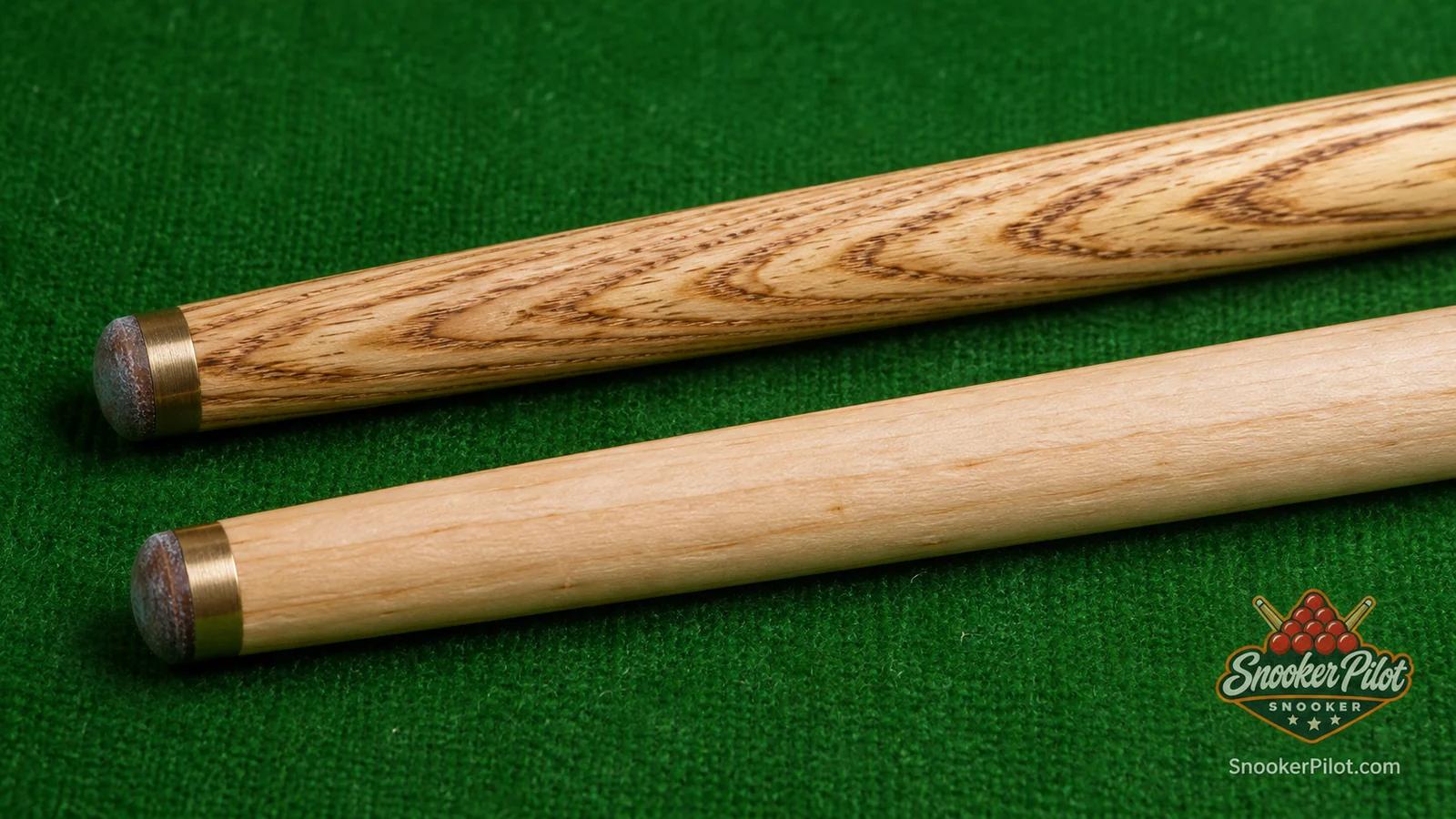
Begin with the visible and practical differences
Ash commonly shows a more pronounced grain pattern, while maple often has a less prominent visual grain. Some players use the grain as a familiar visual reference; others prefer a quieter appearance. Neither preference determines how straight you deliver the cue. Judge the actual shaft in your hands rather than a photograph of a wood sample. The finish, taper, diameter, weight and balance all affect the experience, so the tree species does not describe the whole playing tool.
Do not reduce feel to a single label
Players may describe one cue as firm, lively or soft, but those words can reflect construction and tip as much as wood. Two ash cues can feel noticeably different, and the same is true of maple. A fair comparison needs similar length, weight and tip condition where possible. If several specifications change at once, record that fact. Treat another player’s preference as a suggestion to test, not evidence that the same material must suit your stance, grip and delivery.
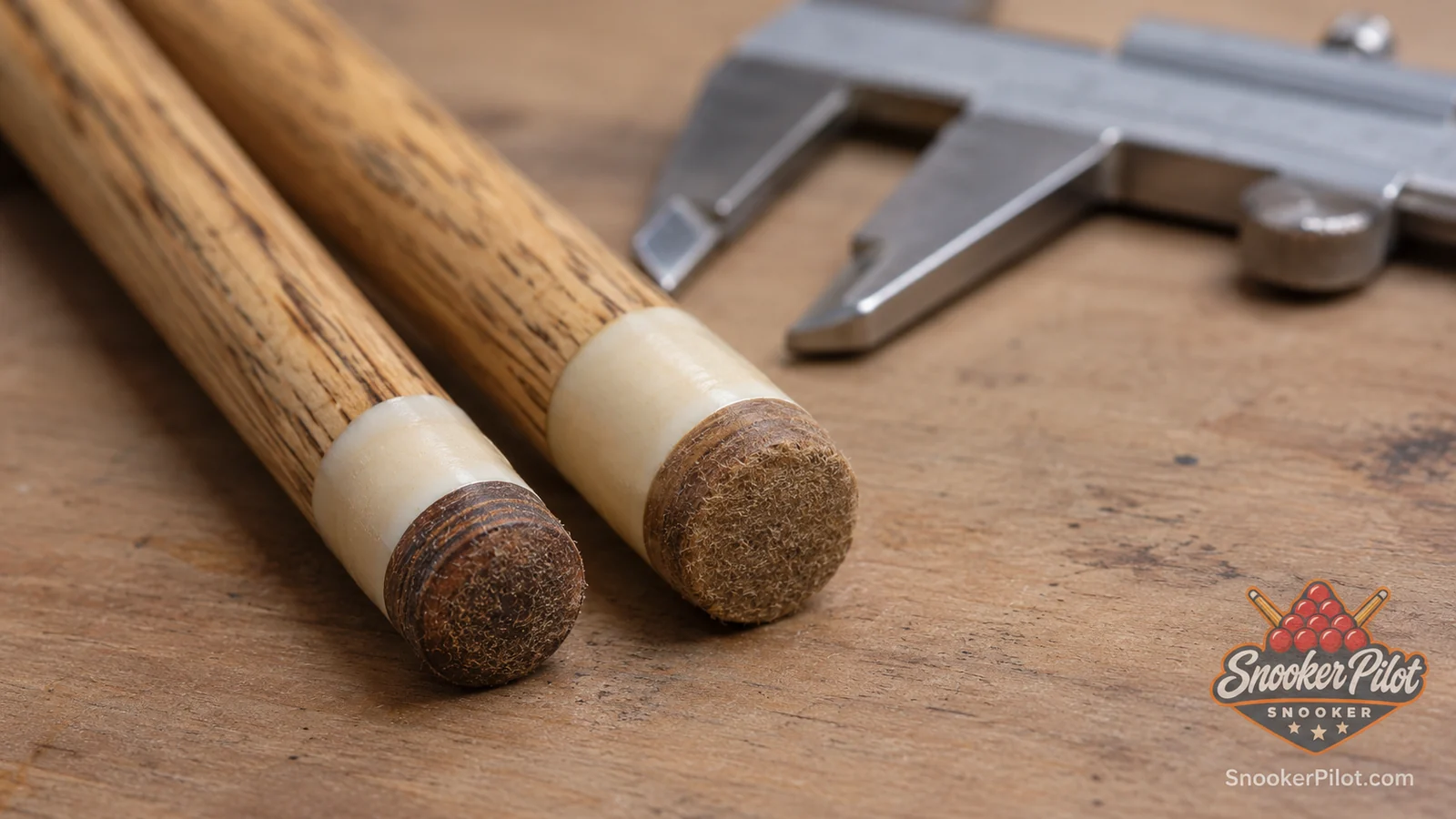
How to Choose Your First Snooker Cue: A Practical Buying Guide
Run the same short test with both cues
Use ordinary centre-ball pots, a controlled stop and a modest position shot on one table. Try to reproduce the starting locations and pace. Look for a cue you can align and deliver consistently, not just the one producing the strongest single screw shot. Ask about joint quality, tip servicing, returns and the maker’s guidance. A reliable individual cue with suitable balance deserves more attention than a sweeping claim that every example of one wood is better than every example of another.
Choose for ownership as well as first impressions
Transport, storage and the availability of competent maintenance matter after purchase. Confirm that the case fits and that the extension arrangement suits your club use. Follow the manufacturer’s cleaning instructions and avoid unnecessary modifications during the first adjustment period. Give yourself a stable run of practice and real games before attributing a result to the wood. The best purchase decision is the complete cue you can use comfortably and maintain, rather than an argument you won on an equipment forum.
At your club with SnookerPilot
SnookerPilot can keep the same player profile and local match records while a player tries different equipment. Combine genuine game and break history with separate notes identifying the cue used. Those records are context, not proof of a material advantage. The software’s practical role is clear scoring and table organization, with queues and tournaments available on Club and higher packages.
Compare the packages