
Snooker Cue Tip Sizes Explained: Which Diameter Suits Your Game?
Understand tip diameter, tip shape and condition, then compare cues without assuming that a smaller tip automatically improves accuracy.
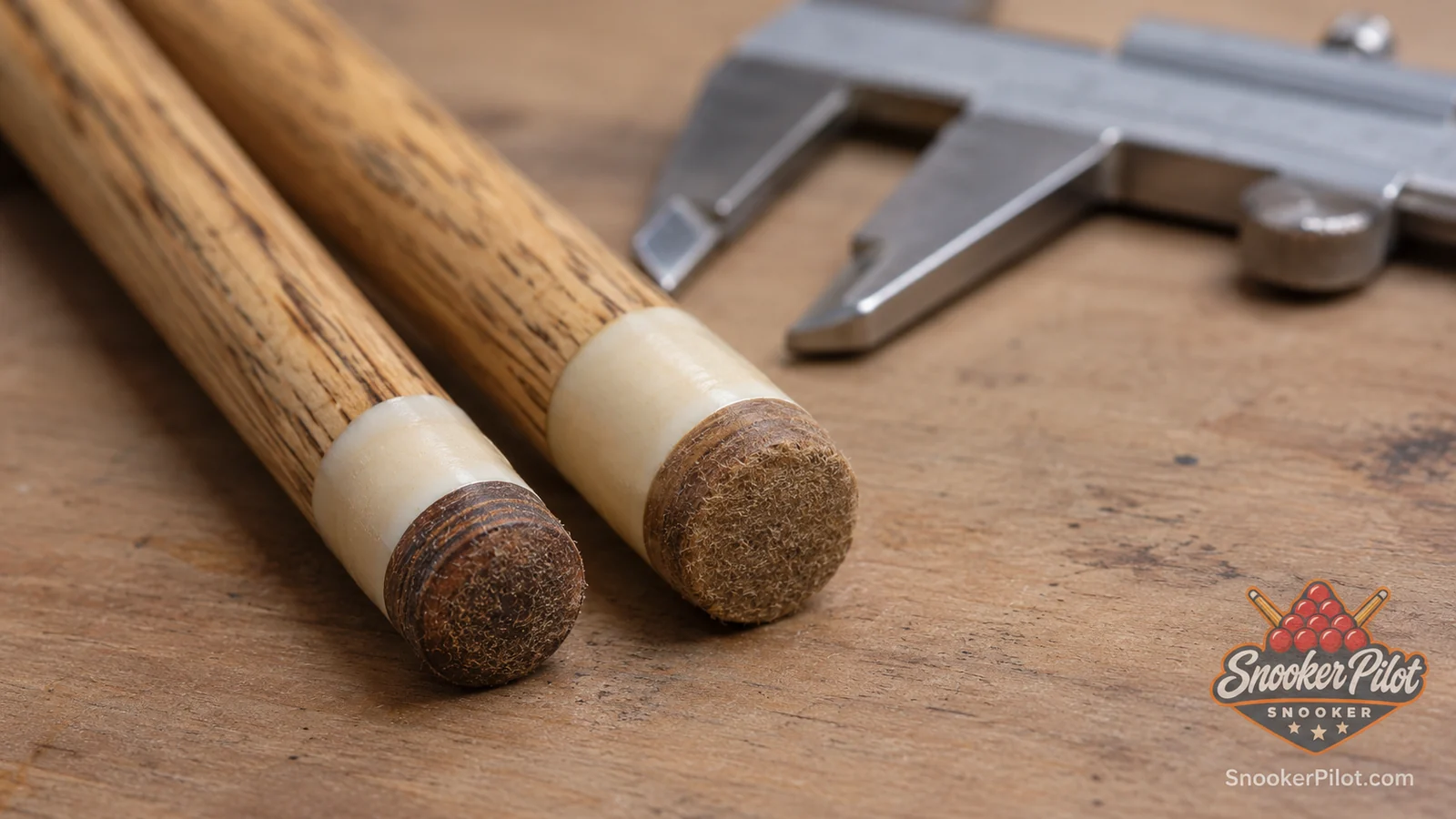
Separate diameter from shape
Tip diameter is the width across the end of the cue; tip shape describes the rounded playing surface. A cue can have the same diameter as another while feeling different because its tip is shaped or worn differently. The ferrule and shaft also influence what you see as you address white. When asking for advice, state the actual measured size and condition instead of only saying “a small tip”. The dimension is one part of a complete cue, not a direct measurement of your ability.
Use published specifications as a reference
Manufacturer listings show how specifications vary between models and individual examples. Peradon’s linked Chiltern listing, for example, describes a nominal tip range of 9½–10mm. That is an example of a genuine snooker specification, not a universal prescription or a recommendation to buy that model. Compare the cue’s weight, balance and length as well. If a retailer offers a custom diameter, ask what changes to the shaft or ferrule are involved and whether those changes affect the warranty or later maintenance.
How to Choose Your First Snooker Cue: A Practical Buying Guide
Compare with simple, controlled shots
Try a familiar centre-ball pot, a stop shot and a modest positional stroke on the same table. Notice your confidence in locating the centre and delivering smoothly. Avoid judging a tip only by a dramatic screw shot that you rarely use. A smaller diameter may change your visual reference and feel, but it does not remove aiming or delivery errors. If the comparison also changes the cue’s balance and tip hardness, you cannot reliably attribute every difference to diameter alone.
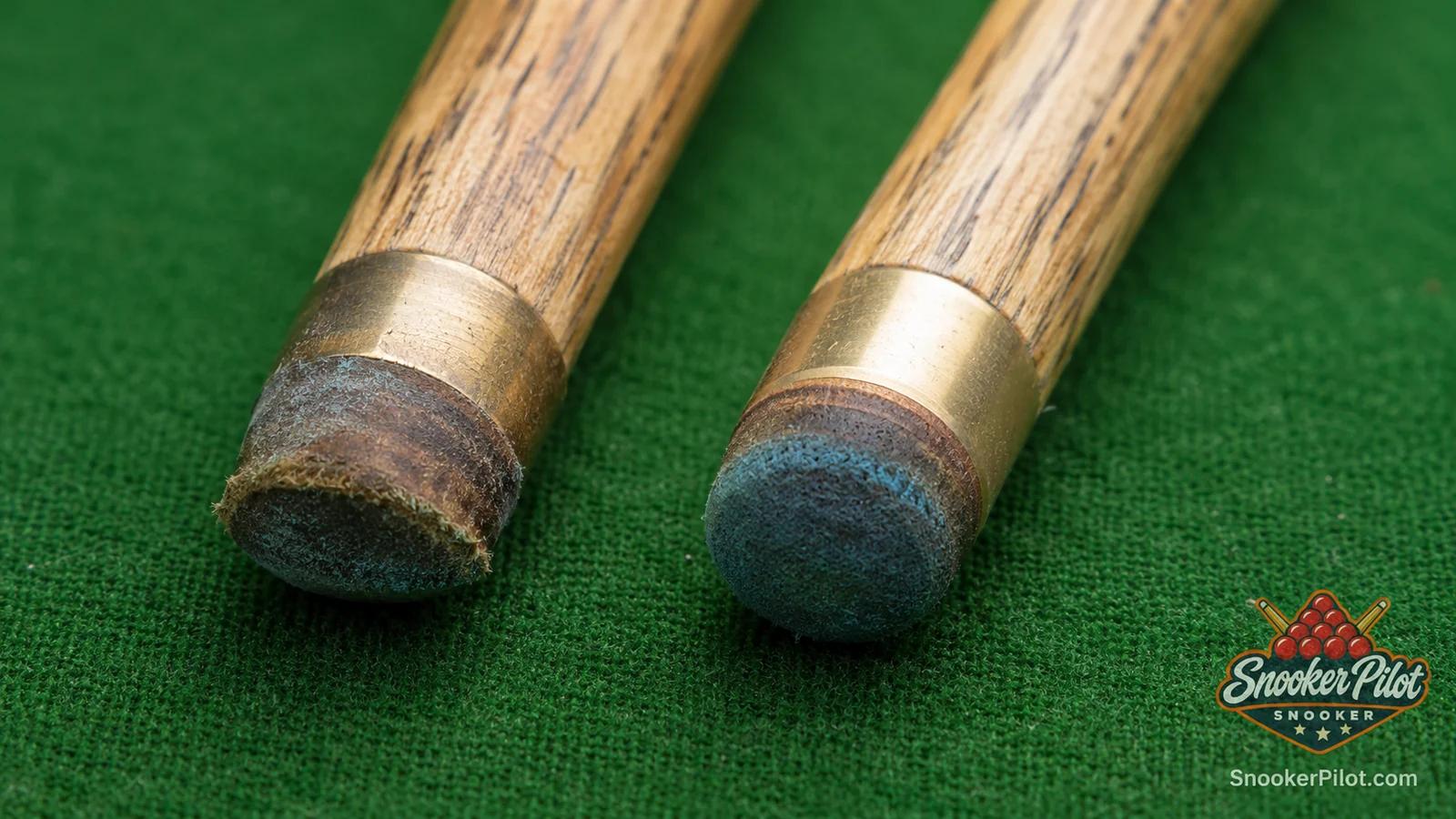
Inspect condition before changing size
A worn, uneven or poorly attached tip can make the cue feel wrong even if the diameter suits you. Ask a competent cue technician about the usable leather, secure fitting and suitable shape before requesting permanent reduction of the shaft. Routine care should follow the maker’s guidance; repeatedly sanding because one session went badly is not a sensible fitting method. Keep a note of the specifications you actually tried, then allow time to adapt before making another major change.
At your club with SnookerPilot
SnookerPilot can preserve a player’s real game history while equipment changes are evaluated over time. Use separate notes for cue diameter and tip work, because the app is not an equipment inventory or a tip-selection calculator. Its TV score and break display keep the match organized while the player learns how the cue feels. Local records remain available with every package.
Compare the packages