
How to Escape a Snooker: One-Cushion Practice for Beginners
A good escape begins with finding a legal first contact, not hitting harder. Build a simple one-cushion reference, learn how pace changes the rebound and choose a sensible risk when the direct route is blocked.
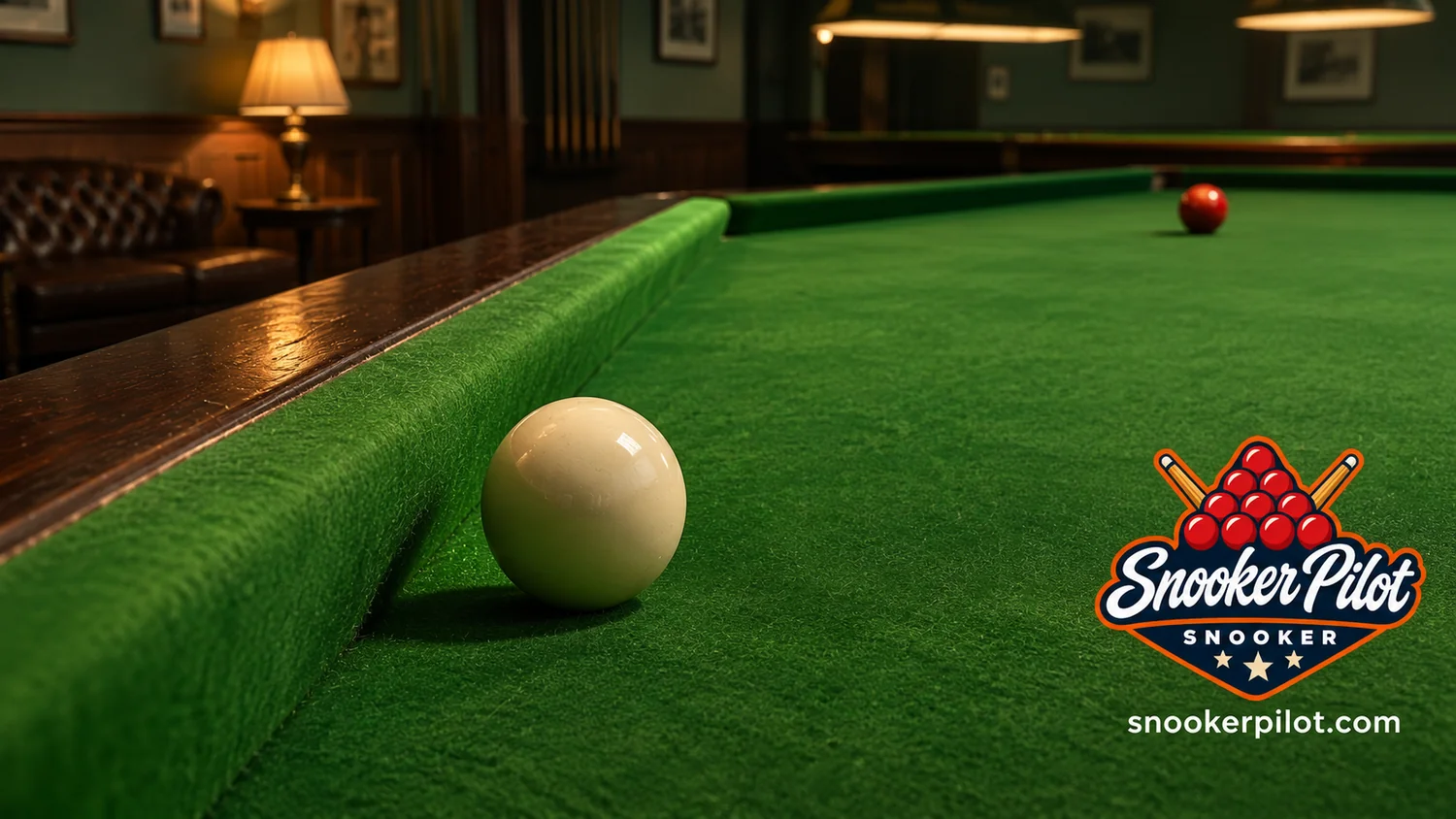
Read the legal target before the cushion
Identify the ball on and the balls blocking the direct route. Look for the widest legal target rather than automatically choosing the nearest red. A snooker can offer several cushion routes with very different margins. Stand back and consider where the white could finish after contact, including in-off risks. During a match, make a genuine attempt under the applicable rules; a planned safety outcome does not excuse missing the required ball. Ask about a free ball only when its actual conditions are met.
Build one reference with gentle pace
In practice, start with an unobstructed white and one red so a side-cushion route is easy to see. Imagine the reflected target beyond the cushion as an initial geometric guide. Real cushions, spin and speed mean this is a starting estimate, not an exact universal formula. Use centre-ball striking and a modest, repeatable pace. Try five attempts from the same position, noting whether the rebound reaches the near or far side of the red. Change one factor before repeating.
Snooker Safety Play: How to Leave Your Opponent Difficult Shots
Add an obstruction and compare routes
Once the reference is familiar, place a colour between the white and the direct red line in a permitted practice session. Keep it clear of the chosen cushion path so the task is a manageable escape. Compare a fuller target with a thin-edge contact and notice how much accuracy each demands. Do not secretly mark the cloth or place aiming objects during a match. A qualified coach can help if cue delivery makes the rebound inconsistent even when your intended line stays the same.
Separate contact practice from match decisions
A successful training contact is useful, but a match escape also involves the penalty value, white-ball position and the opponent's next opportunity. Multi-cushion routes add uncertainty and should follow, rather than replace, an understood one-cushion reference. A foul-and-miss ruling depends on the rules and circumstances, not your practice success rate. After a foul, leave the position alone until the referee or players settle the next action. Record the learning point later instead of arguing from a remembered angle system.
At your club with SnookerPilot
After escape practice, play a short scored session using SnookerPilot at the club. Agree any foul with your opponent before entering the penalty and review whether your chosen route had a sensible margin. Keep training-contact tallies separately; the app makes the live score clear while people remain responsible for judging each escape.
Compare the packages