
Push Shot or Double Hit? Snooker’s Close-Ball Rules Explained
A long follow-through is not automatically a foul. Learn what makes a push stroke, how a double hit differs and why close balls require care.
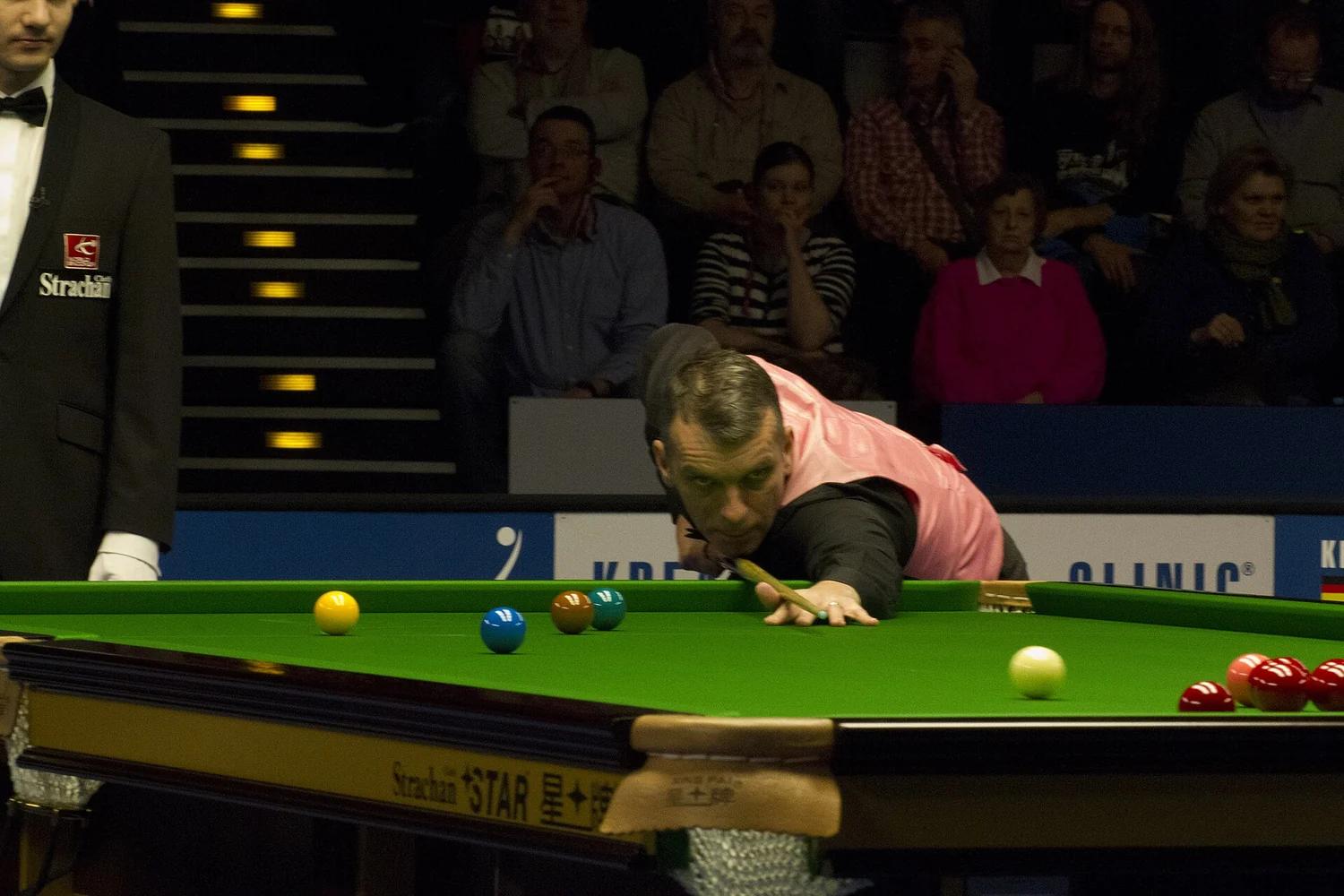
A push stroke concerns the contact, not the finish
A normal stroke has brief tip-to-white contact. A push stroke involves contact that persists improperly as the white moves or as it meets an object ball. The WPBSA definition includes a specific fine-edge exception for almost-touching balls, so distance alone does not settle every decision.
A cue finishing well beyond the original white position is not proof of a push. It may simply be a normal follow-through after the ball has left. The relevant question is what happened during contact, not how dramatic the finishing pose looks.
A double hit is a second tip contact
A double hit happens when the cue tip strikes the white more than once in the stroke. It is a different mechanism from one prolonged pushing contact, although either can occur in a cramped position. Both are fouls; the penalty depends on the applicable ball values and infringement.
Imagine the white very close to a red. A straight, forceful delivery can allow the tip to catch the white again after its collision. Calling every such position legal because the player used a short backswing is unreliable.
There is no universal safe-gap measurement
A club shortcut such as one chalk-width between the balls is not a substitute for the rules. Stroke direction, ball spacing and the actual contact matter. With touching ball, establish which ball is touching and apply that separate procedure before choosing a shot.
If you are unsure, ask the referee to watch before playing. A thin contact or another legal escape may avoid the awkward delivery, but neither a raised cue nor a sharp jab guarantees legality. Do not damage the cloth while trying to solve a rules problem.
Learn the distinction away from a disputed frame
During practice, set up a comfortably separated red and white and make a normal, controlled stroke. Move them closer gradually with a qualified coach observing. Slow-motion video can help explain the action, but an unclear recording is not automatic proof that a match referee was wrong.
During competition, stop the discussion before balls are moved and let the referee decide. Record the awarded penalty as a penalty, not as an extra pot. Keeping those categories separate makes both the score and the break total easier to understand.
At your club with SnookerPilot
SnookerPilot gives regular club games a shared TV scoreboard and recorded results. Enter the referee’s awarded foul points accurately; the software is a scoring and club-management tool, not a camera-based detector of push strokes or double hits.
Compare the packages