
Cue Ball in Hand in Snooker: Where to Play After an In-Off
After potting the white, the next player normally plays from the D—not anywhere on the table. Learn the placement, direction and free-ball distinctions.
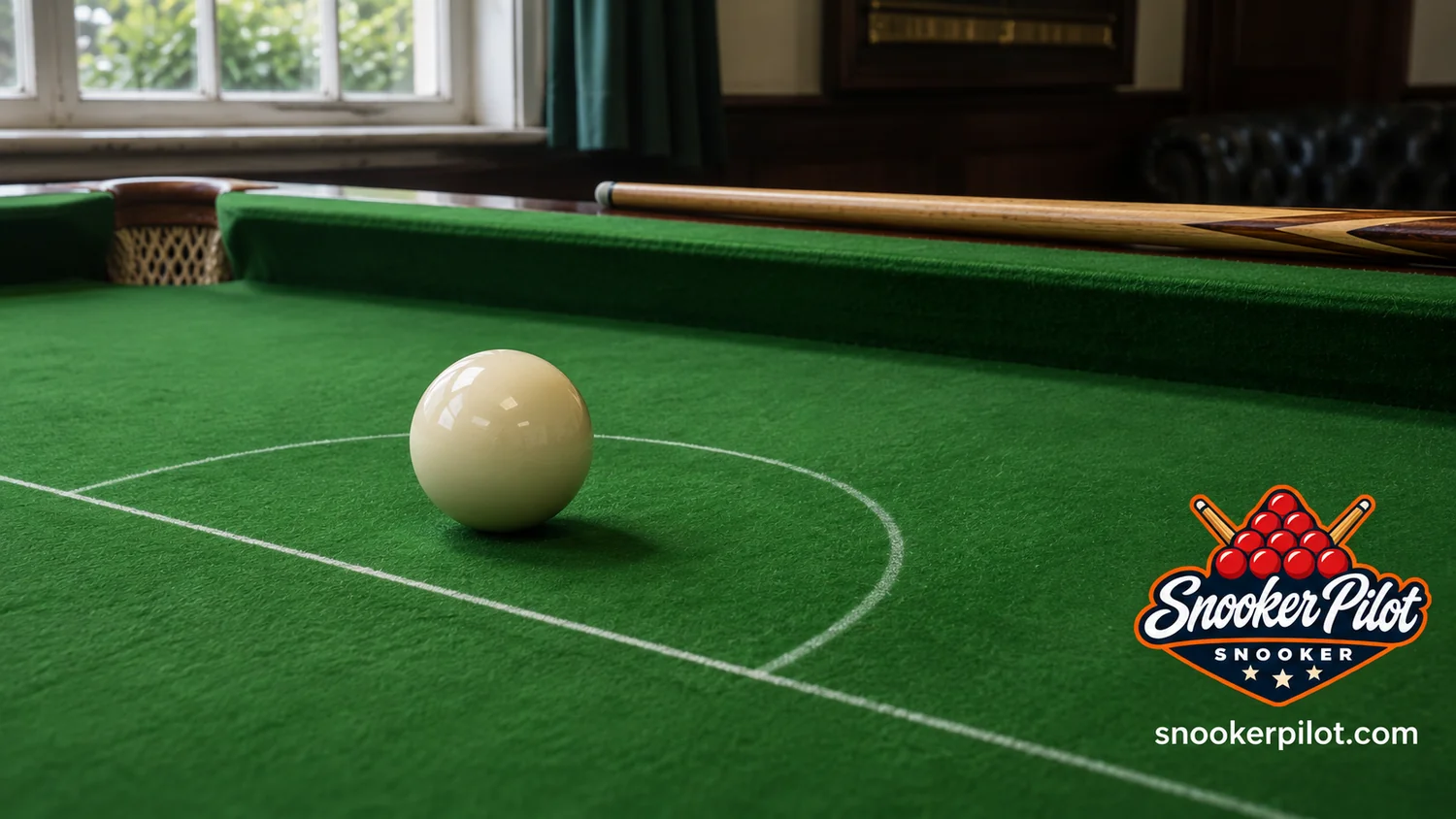
When does the white become in hand?
In standard snooker, the white is in hand before the first stroke, after it is pocketed or forced off the table, and for the opening stroke on a re-spotted black. An in-off means the white went into a pocket. The incoming player receives the prescribed penalty and normally plays the replacement white from the D.
Do not import pool's anywhere-on-the-table procedure. A format such as the Shoot Out has its own variations, but those do not replace the standard procedure for an ordinary club frame.
Place it on or inside the D and play in any direction
The cue ball must be played from a legal position on or within the D's lines. You may choose a position that gives a sensible first contact, provided you do not move another ball while placing it. Standard snooker allows play in any direction; you do not first have to send the white out of baulk.
For example, an available red on the baulk side can be a legal target. Check that red is on and that the first contact is correct rather than imposing an extra directional restriction borrowed from another game.
A foul does not always give a new placement
If an opponent hits the wrong ball but the white stays on the table, you do not automatically pick it up and place it in the D. The available choices depend on the infringement and whether a miss or free ball was called. Ask the referee before moving anything.
A free-ball assessment with the white in hand considers available positions throughout the D, not just the spot where you first wanted to put it. One obstructed line does not by itself demonstrate that the necessary snooker exists from every permitted position.
Use a calm replacement routine
Wait for the referee's decision, confirm the ball on and inspect the D for other balls. Choose your position before settling into the stance, then check the first-contact line. Avoid casually sliding the white through nearby colours. A placement error can turn an opponent's foul into your own problem.
Keep the penalty and the next scoring visit separate on the scoreboard. Receiving four or seven points does not mean you potted those points yourself. If a replay option is being discussed, leave the table layout intact until the correct next action has been confirmed.
At your club with SnookerPilot
SnookerPilot keeps regular club scoring visible on paired Android TVs while the tablet organizes the table. Enter the awarded penalty once, then continue the next visit correctly. Keep ball placement and referee decisions distinct from software input; the display should reflect the ruling, not determine where the white may be placed.
Compare the packages