
Snooker Break-Off: Rules, Technique and a Simple Practice Test
Learn where to place the white, what makes a break-off legal, and how to practise a controlled opening without treating it like a pool break.
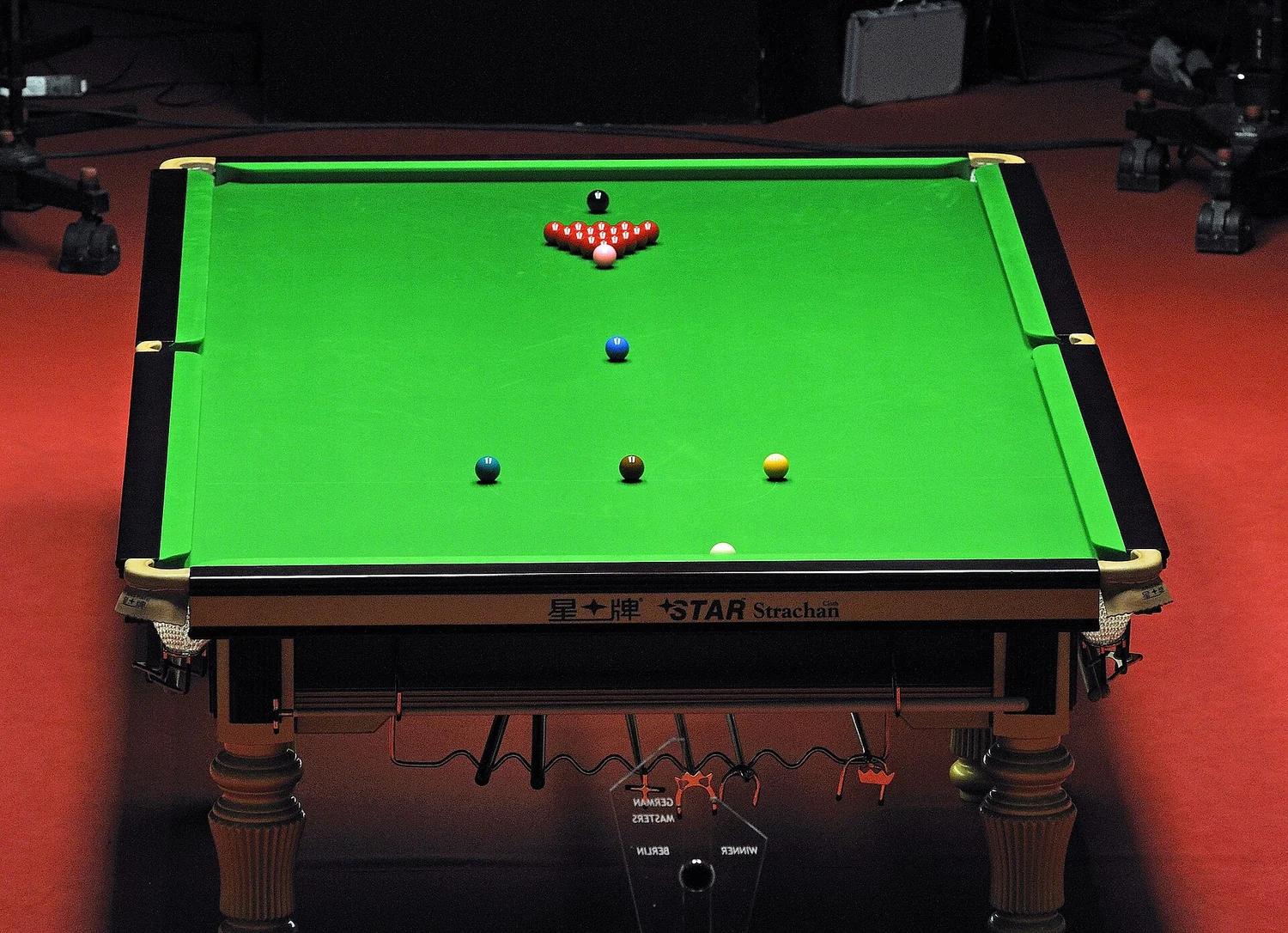
What must a legal break-off do?
The opening stroke starts with the cue ball in hand inside the D. A red is the ball on, so the white must contact a red first. Standard snooker does not require a certain number of balls to reach cushions, nor does it require a red to be potted. Those ideas usually come from pool.
Before playing, check the rack, the colour spots and your position in the D. A safe opening still has to be a legal stroke: do not sacrifice correct first contact simply to hide the white.
Why is control more useful than power?
A conventional safety break clips an outside red and tries to bring the white back towards baulk. The target is an awkward reply, not a spectacular spread. The exact starting position, thickness of contact, pace and side depend on the table and your delivery.
Begin with a manageable pace and a small, deliberate contact. If the white stays near the pack, examine the contact and route before adding speed. If several reds escape into open potting positions, a harder strike may make the problem worse.
Snooker Safety Play: How to Leave Your Opponent Difficult Shots
Practise ten openings with one variable
Rebuild the pack and use the same cue-ball starting position for ten attempts. Record three things: legal first contact, final cue-ball area, and whether your opponent would have an obvious opening red. Use broad landing zones rather than demanding one perfect finishing point.
Repeat the set while changing only pace or contact thickness. Comparing two controlled sets tells you more than ten unrelated experiments. Include a few attempts from the opposite side of the D, but score those separately because the available route is different.
What if a professional uses a different break?
Professional players use alternative contacts and routes, including variations that attack a different red in the pack. A televised success does not prove that one starting point is reliable on every club table. Cloth, cushions and tiny contact changes can alter the result.
Watch the white's route and the opponent's next chance rather than copying the player's cue action blindly. Your useful measure is a repeatable legal opening with limited chances conceded. Test a new variation during practice before relying on it in a deciding frame.
At your club with SnookerPilot
Use SnookerPilot to keep regular club frames organized on the tablet and show scores on the paired Android TV. Compare match results over time, while keeping your ten-shot break-off practice notes separately: a final score alone cannot tell you whether an opening safety was good.
Compare the packages