
How to Clean Snooker Balls Safely: A Club Maintenance Guide
Clean snooker balls need a compatible product and a gentle process. Learn how to remove ordinary contamination, avoid damaging household shortcuts and recognise when a ball needs inspection rather than more polishing.
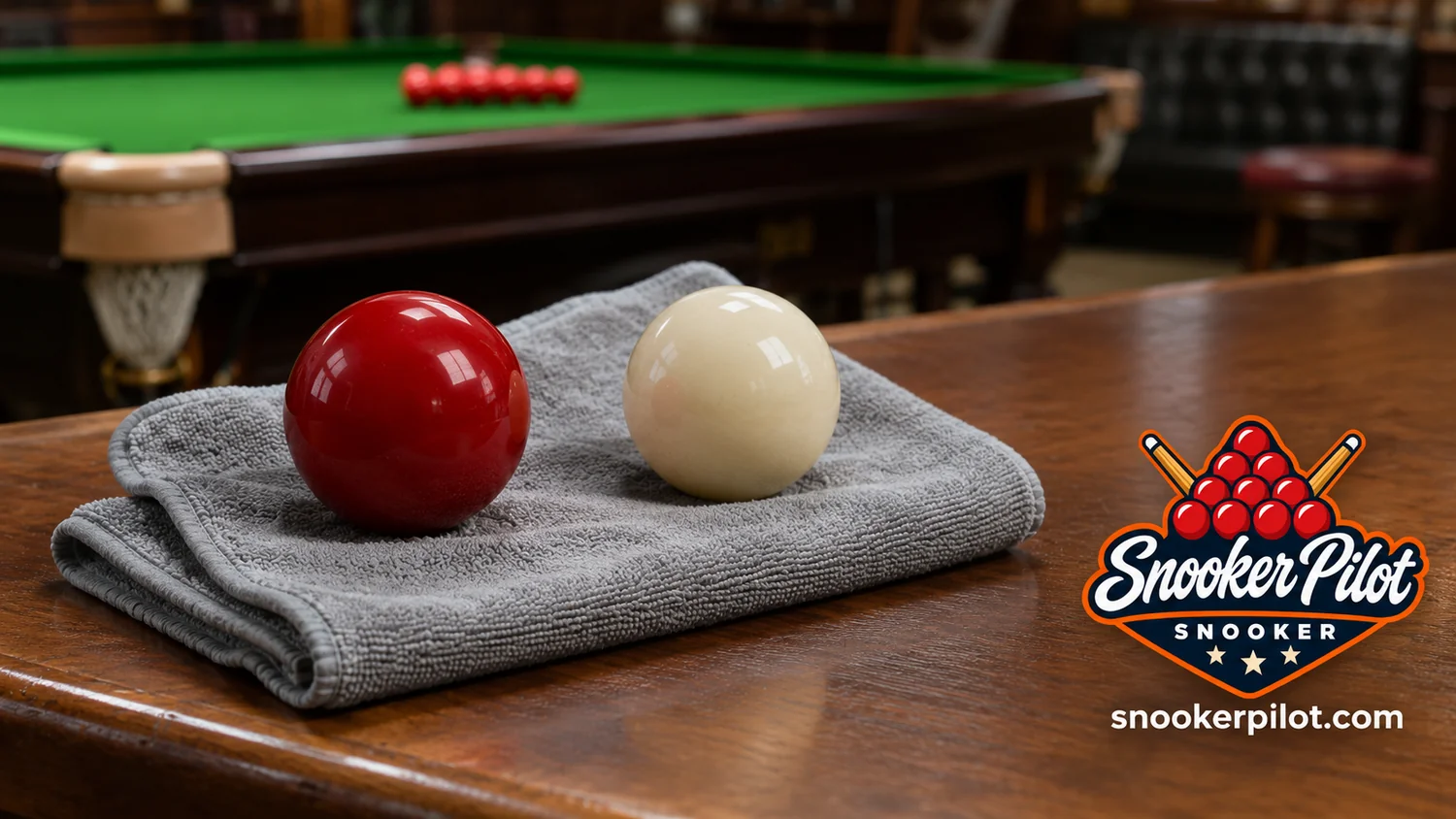
Check the ball maker before the cleaner
Identify the ball set and follow its manufacturer's current care instructions. Aramith provides products intended for phenolic billiard balls; a compatible approved cleaner is a better starting point than a household recipe. Do not assume that every old or unbranded ball has the same material and finish. Avoid abrasive pads, strong solvents and improvised vinegar, bleach or dishwasher treatments. A product that makes a kitchen surface shine can damage a ball's finish or leave residue that changes how it behaves on cloth.
Clean gently away from the playing surface
Work on a clean, stable counter with a soft cloth, keeping liquid and bottles away from the table. Use the amount and method stated on the compatible product rather than saturating the ball. Treat one ball at a time, remove residue as directed and finish with a clean dry cloth. Do not return a damp or slippery ball to play. If using a mechanical ball cleaner, follow its instructions and the ball maker's compatibility guidance rather than assuming more time or pressure improves the finish.
Why Do Snooker Players Use Chalk—and How Should You Apply It?
Inspect damage instead of polishing endlessly
Look for chips, cracks, deep scratches and persistent surface damage under even light. Stop if cleaning exposes a defect; a damaged ball needs assessment and possibly replacement. Do not sand a ball or try to remove a deep scratch by wearing down the surrounding surface. Inconsistent sizes or mismatched replacement balls can also affect a set. For a commercial club, record the set and any replacement specification so future purchases are compatible. Cleaning is routine care, not a method for restoring every damaged sphere to its original dimensions.
Create a repeatable club routine
Choose a cleaning frequency based on usage and manufacturer advice, then log what was done. Clean hands, controlled chalk use and keeping drinks away reduce contamination between sessions. During a refereed match, request ball cleaning through the referee instead of lifting a ball yourself and guessing its position afterwards. Clean equipment can reduce avoidable contamination, but it does not guarantee the absence of every kick or unexpected contact. If problems continue, review balls, cloth and playing conditions together rather than applying stronger chemicals.
At your club with SnookerPilot
A club using SnookerPilot can keep scored sessions clear while staff manage equipment care between bookings. Record cleaning products and maintenance checks in a separate club log, then use the displayed score for normal play. SnookerPilot supports the club experience; it does not assess ball materials or certify a cleaning product's compatibility.
Compare the packages