
How Long Does a Snooker Match Last? Frames and Match Formats Explained
Estimate a match sensibly by separating frames, winning targets, sessions and unpredictable table time.
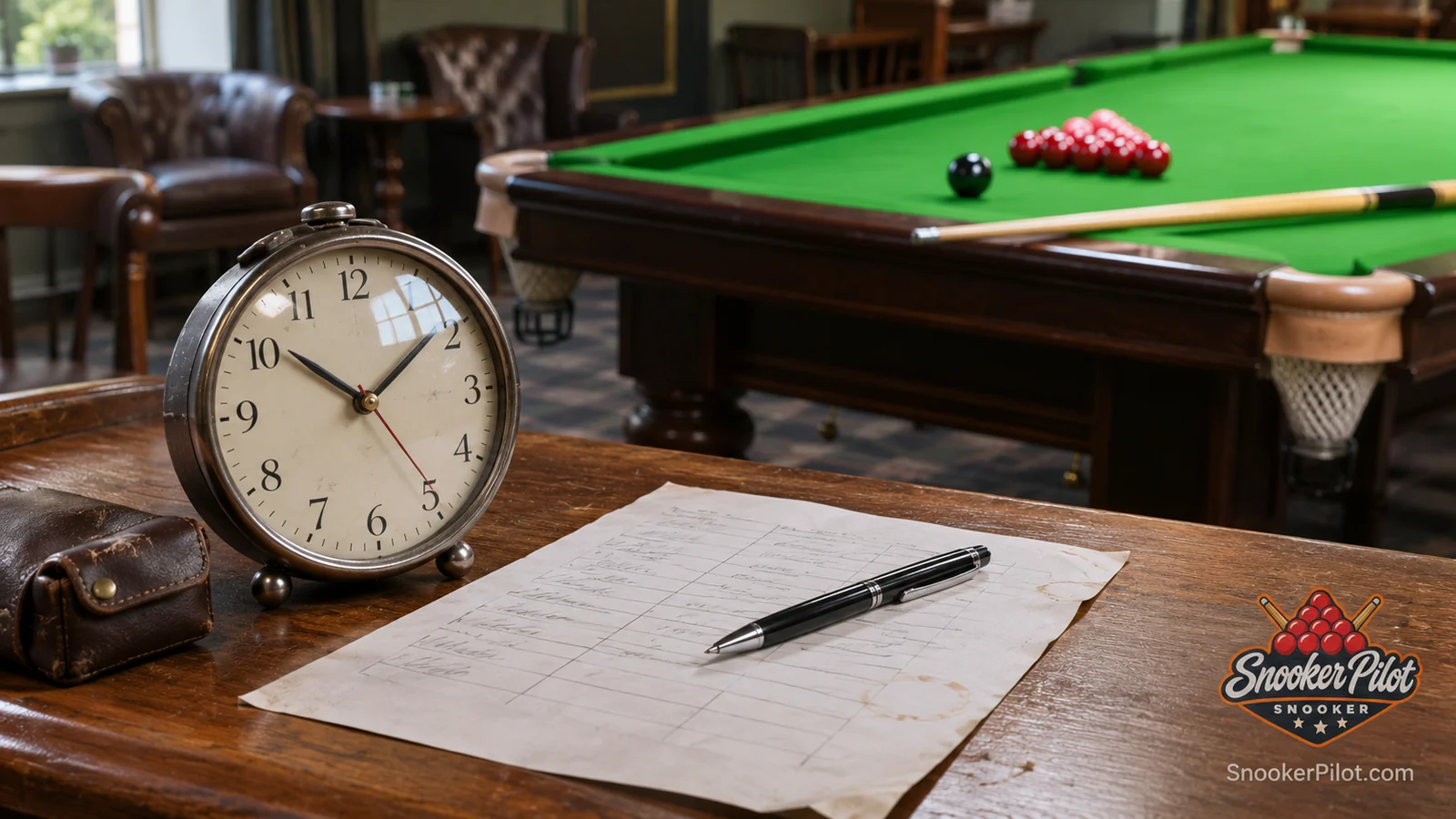
There is no single standard duration
A frame ends through scoring and the rules, not after a fixed universal number of minutes. Break building, safety exchanges, fouls and the players’ experience all affect duration. A match then combines several frames under its format. Knowing that an event is best of nine tells you the winning target, not an exact finish time. Special timed formats need their own rules.
Calculate the possible frame count
In best of nine, first to five wins: a 5–0 result uses five frames, while 5–4 uses nine. Best of five needs three wins and can last three to five frames. Use both the shortest and longest frame counts when planning. A close match is likely to occupy the table longer than a one-sided result, even before considering the pace of each frame.
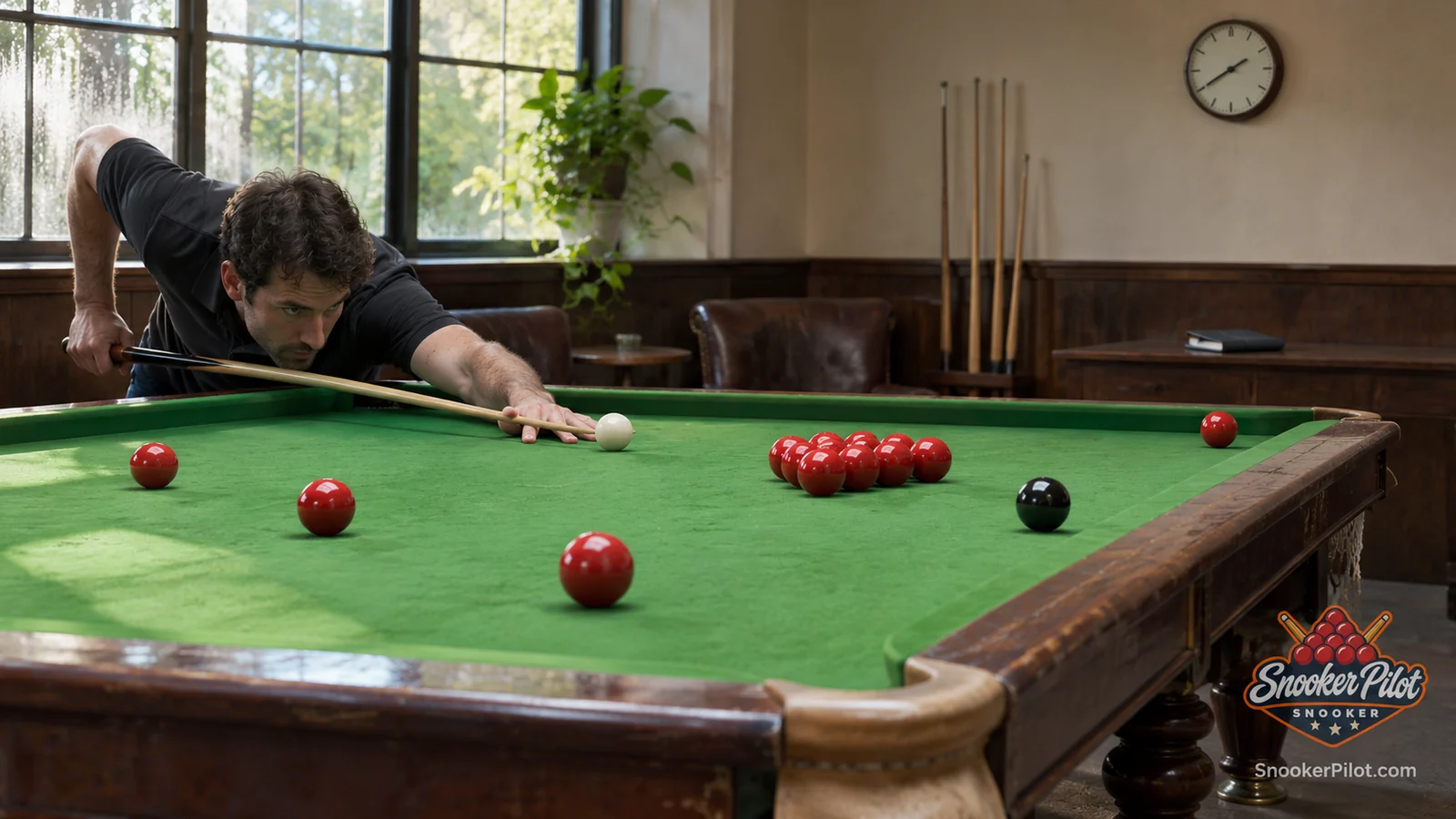
Use your own observed durations
For a club estimate, collect completed-game times from comparable players and conditions. As a planning example only, if you allow 25 minutes per frame, a best-of-five match occupies roughly 75–125 minutes before breaks and changeovers. That is arithmetic using an assumed rate, not a universal snooker average or a guaranteed booking duration. Add realistic allowance for delays.
Publish a schedule that can recover
State arrival and start expectations, leave changeover time and reserve capacity for overruns. Professional multi-session matches resume later with the existing score; a club event may instead use shorter races. Tell entrants the format before they pay. If a closing-time rule is necessary, agree it beforehand rather than inventing a winner when the room must close.
At your club with SnookerPilot
SnookerPilot records elapsed game time and local history, helping managers review actual table activity rather than rely on a guessed average. Club and higher supports frames-to-win tournament settings. Recorded time is useful for planning, but the current product’s game charges should not be confused with an automatic hourly-billing meter.
Compare the packages