
Snooker Ball Values and Colour Order: An Easy Scoring Guide
Understand every snooker ball’s point value, the final colour sequence and the difference between a break, a frame score and penalty points.
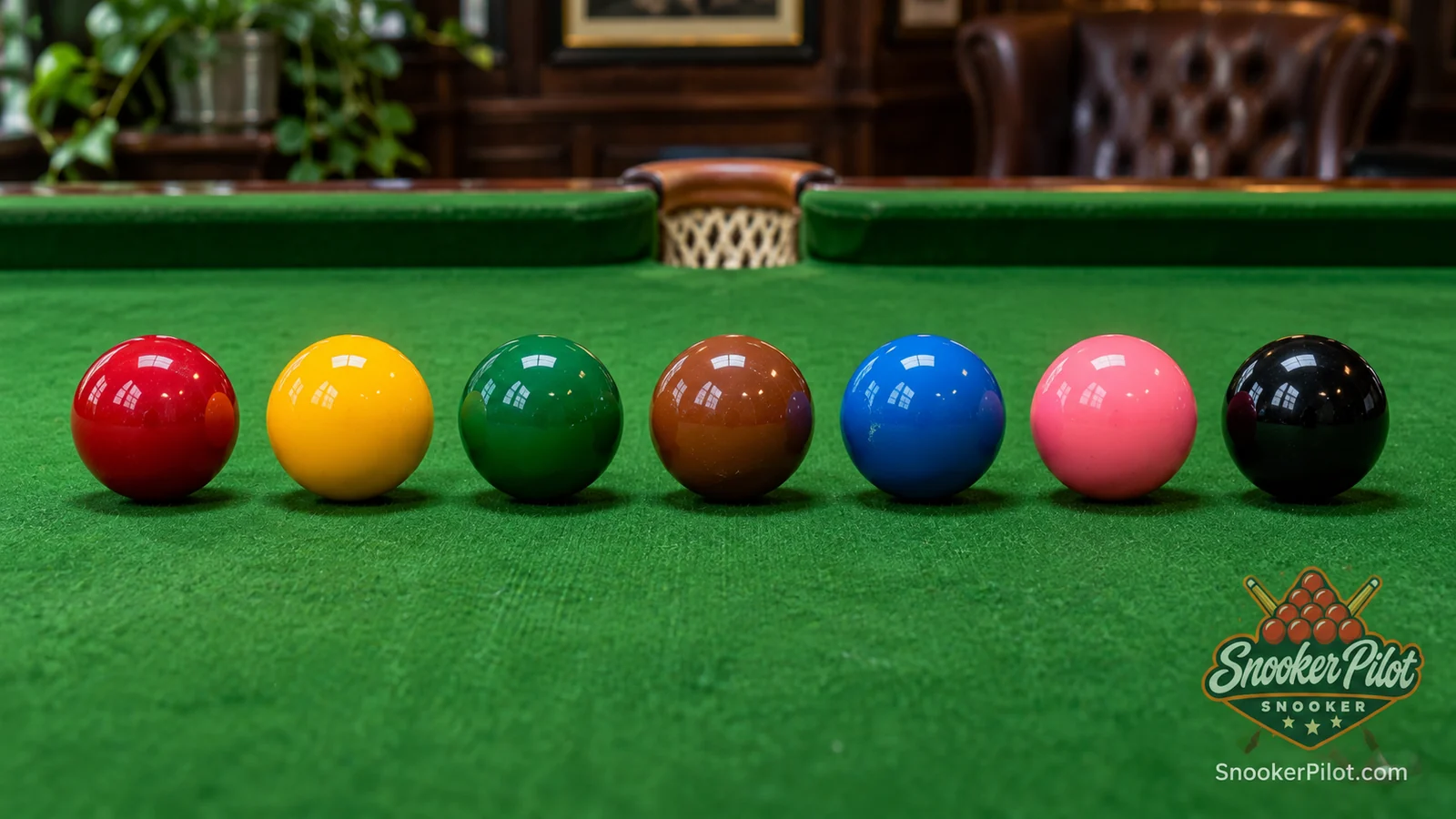
Learn the seven values
Each red is worth one point. The colours rise in value: yellow two, green three, brown four, blue five, pink six and black seven. White is the cue ball and carries no scoring value. Colour value stays the same wherever a ball finishes on the table. Beginners sometimes confuse the order in which colours appear on the baulk line with scoring order; remembering the values separately avoids that mistake. Keep a small reference near the scoreboard until the sequence becomes familiar.
Recognize when the order changes
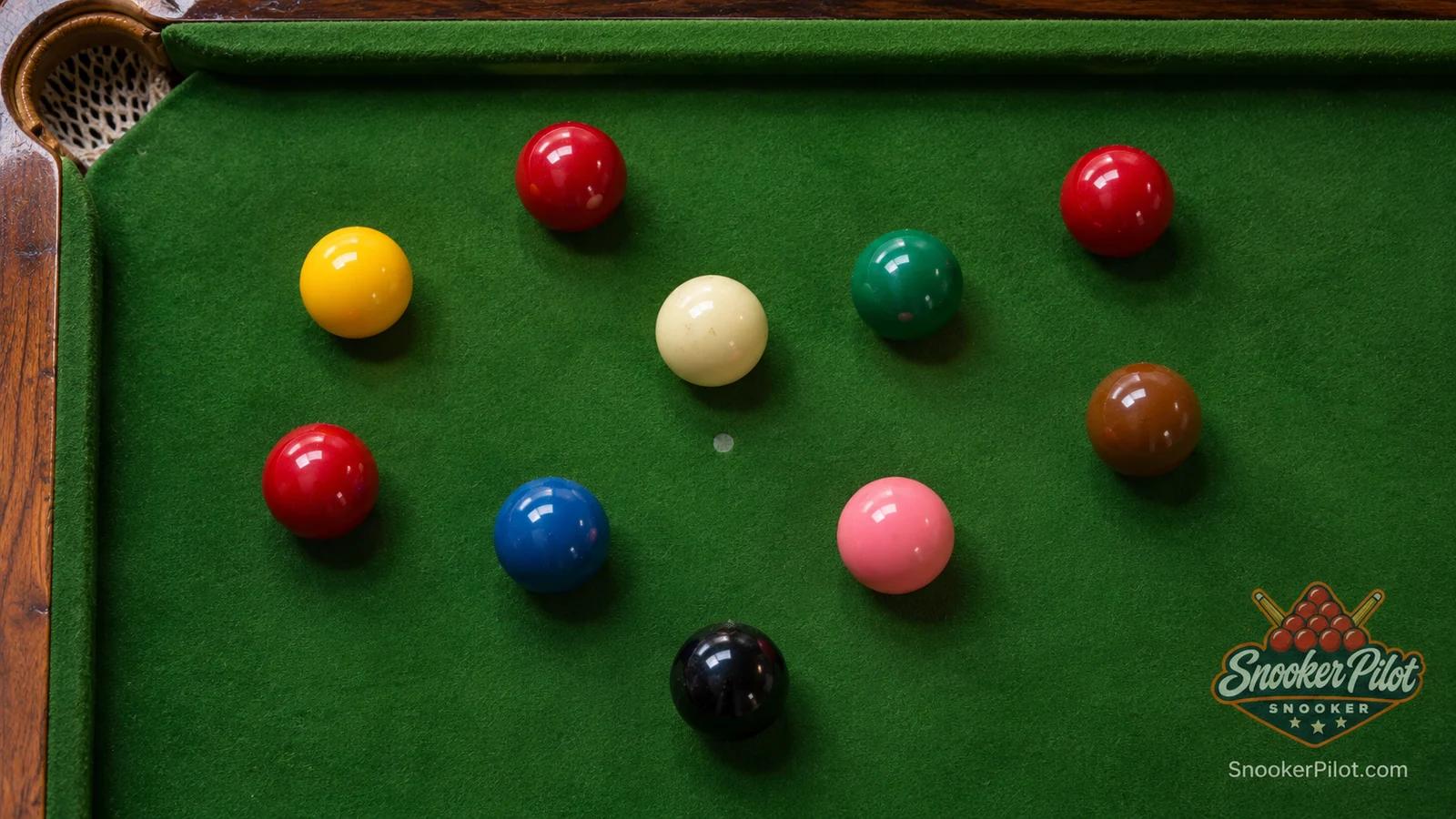
During the red phase, you alternate a red with a chosen colour. You do not have to choose black: a blue with good position may be more useful than a difficult seven-point pot. After the final red, you may still take a colour; that colour is re-spotted. The final clearance then follows yellow, green, brown, blue, pink and black. These six colours total twenty-seven. A colour potted out of turn is not simply added to your score; the stroke must be assessed as a possible foul.
Keep three different totals separate
A break records one uninterrupted visit; your frame score accumulates across all visits. For example, red-black-red-blue makes fourteen in the current break. If your previous frame score was twenty, it becomes thirty-four. Four penalty points awarded after an opponent’s foul increase the frame score to thirty-eight but are not added to that potting break. Announce which number you are changing when correcting a scoreboard. Confusing break and frame totals makes later disputes much harder to reconstruct.
Use a worked scoring check
Imagine a player pots red, pink, red and black, then misses legally. The visit is fifteen: 1+6+1+7. A following four-point foul by the opponent makes the frame score nineteen, assuming it started at zero. The highest completed potting break remains fifteen. In a best-of-five match, winning that frame gives one frame win, not nineteen match points. A practical scoring sheet should therefore distinguish current break, frame score and frames won. Ball history is a useful cross-check when a button was pressed twice.
At your club with SnookerPilot
SnookerPilot separates the large player scores from break information and frames won. Its numbered ball controls and inline ball history help staff reconstruct a scoring visit, while undo supports corrections. Record fouls through the relevant control rather than pretending the opponent potted an extra ball. The tablet’s saved game history provides a result record after play; it does not replace checking the live score at the table.
Compare the packages